
BIG DATA and Deloitte Taiwan Drive Real-World AI Adoption with a Focus on Human-AI Collaboration and Corporate Governance
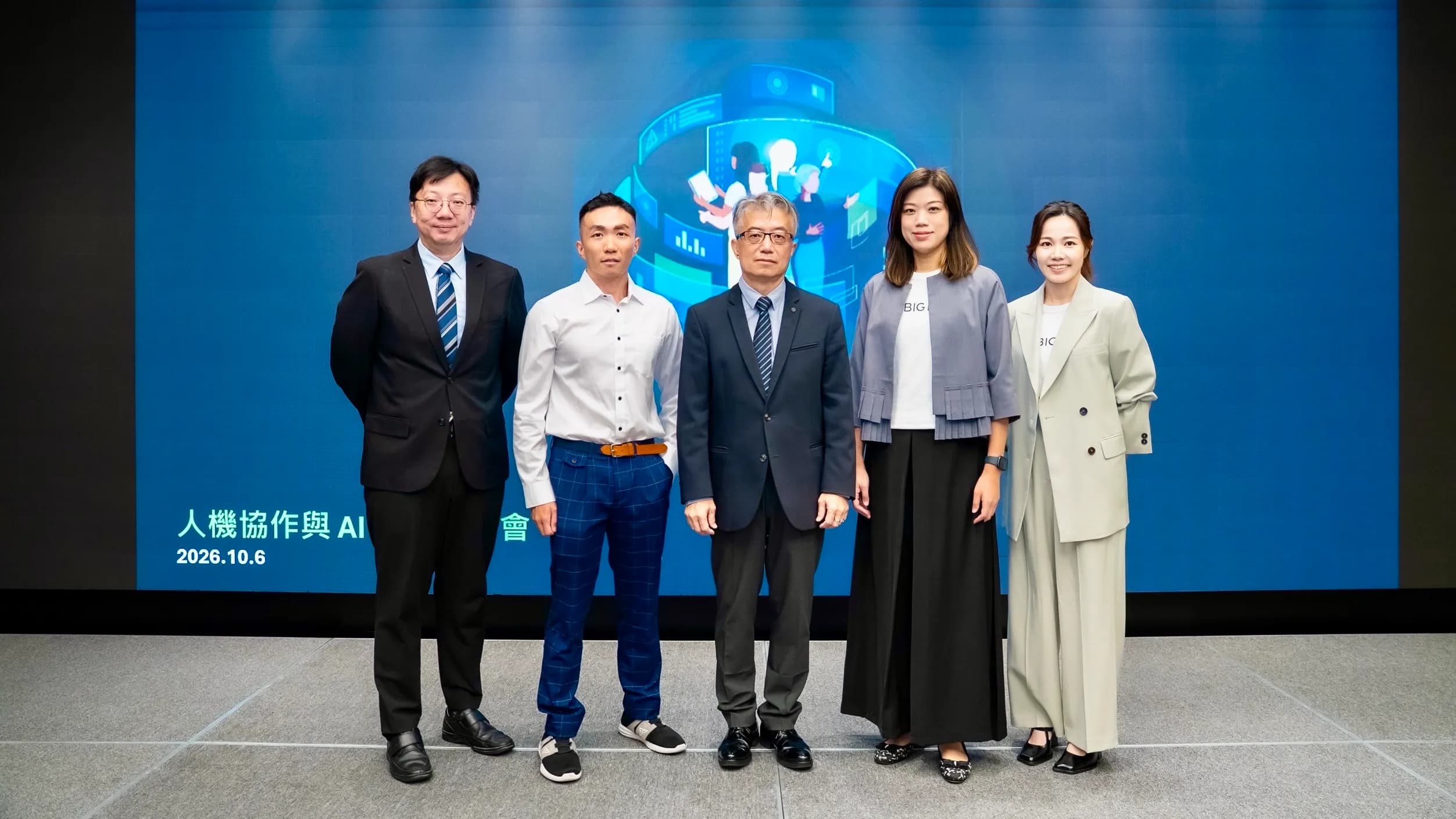
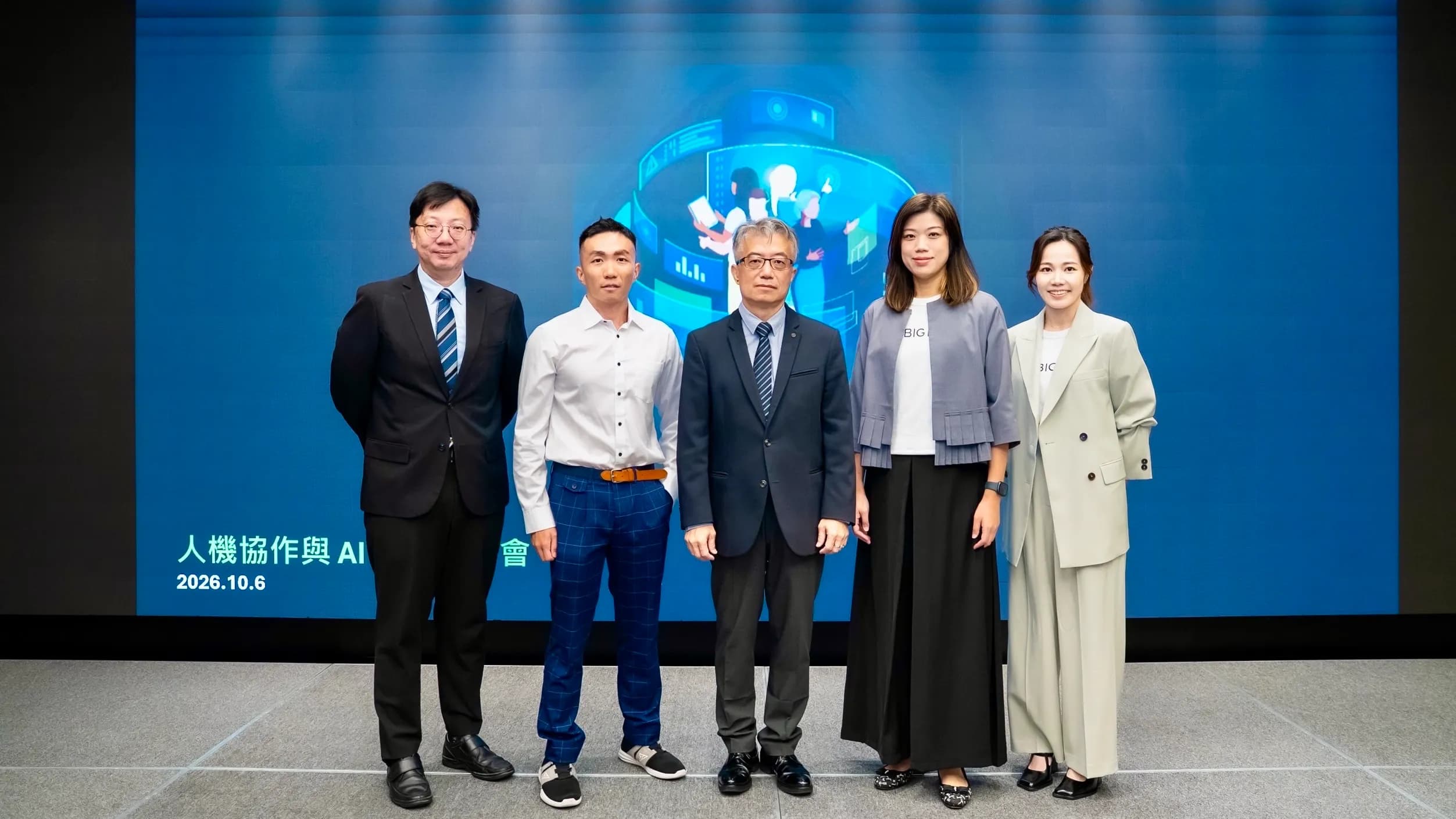
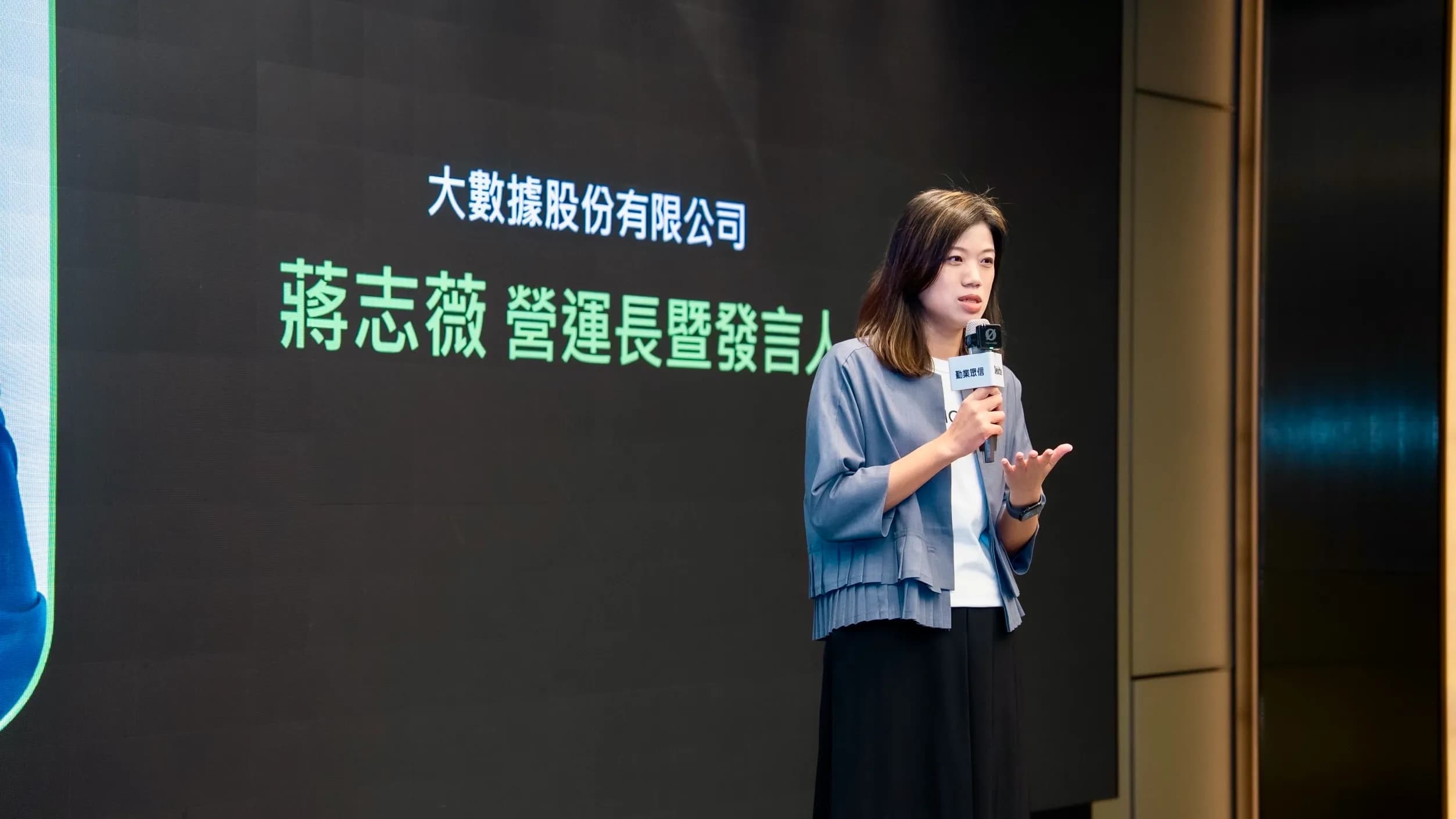
As generative AI evolves from content generation and information retrieval toward Agentic AI capable of executing tasks autonomously, the challenges of enterprise AI adoption have extended beyond the use of individual tools to the integration of existing data, the redesign of workflows, and organizational governance. BIG DATA Co., Ltd. (BIG DATA), Taiwan's leading data technology company, recently co-hosted the "Human-AI Collaboration and AI Governance Seminar" with Deloitte Taiwan. The event brought together a representative from NVIDIA and Shu-Kai S. Fan, Dean of the College of Management at National Taipei University of Technology, to discuss AI Agent technology development, enterprise applications, and risk management, exploring how businesses can build AI operating models that balance efficiency, security, and governance, and move AI from proof of concept (PoC) to real-world deployment. Tomm Chiang, Executive Vice President of Deloitte Taiwan, noted that AI governance must be embedded into AI lifecycle management in order to effectively reduce operational and compliance risks, and to further evolve AI from an efficiency tool into a key partner driving business transformation and sustainable growth. Weiwei Chiang, COO of BIG DATA, stated, "The end goal of AI adoption is not simply having one more AI tool, but truly turning AI into an organizational capability. If AI cannot be integrated with internal knowledge, business logic, and existing systems, it will struggle to enter core operational processes. What enterprises need is an intelligent partner that understands organizational knowledge, follows permissions and operating procedures, and helps complete tasks under human supervision. This is the core of BIG DATA's development of KEYLM and its services."
Enterprise AI Evolves from Tool to "Corporate Second Brain": KEYLM Integrates Knowledge and Workflows
To address challenges such as scattered internal information, difficulties in knowledge transfer, and cross-departmental collaboration, BIG DATA independently developed KEYLM, an enterprise knowledge AI agent platform that helps businesses integrate information scattered across documents, databases, and various business systems, building an enterprise knowledge foundation that AI can understand and use. Compared with general-purpose AI applications that rely primarily on public information as their knowledge source, KEYLM places greater emphasis on proprietary enterprise data, business contexts, and permission management. It enables employees to search for information, organize content, and handle work tasks based on internal organizational knowledge, reducing the operational burden caused by fragmented information or knowledge gaps.
On the technology front, BIG DATA continues to deepen its Traditional Chinese semantic understanding capabilities. Through its proprietary domain language model, BIG10, and related semantic technologies, the company strengthens AI's understanding of Taiwan's local terminology, industry-specific terms, and enterprise knowledge, and designs AI application architectures tailored to each enterprise's data security and deployment requirements. KEYLM was also recently recognized with The WITSA Global Award for AI Entrepreneurship at the WITSA Global AI Awards 2026, demonstrating BIG DATA's achievements in enterprise AI research, development, and application.
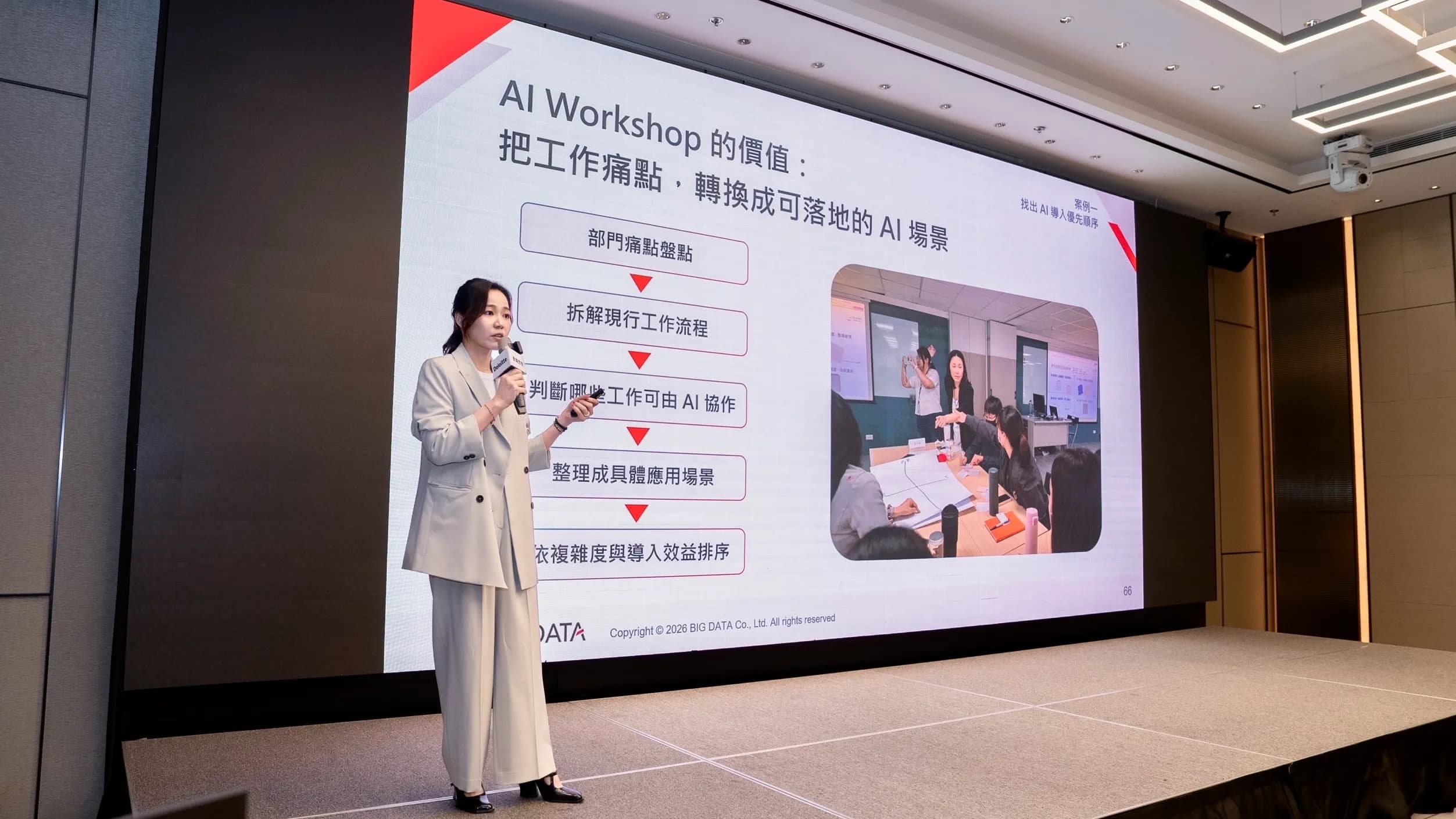
Yu-Ting Yuan, Director of the Innovation Marketing Department at BIG DATA, said that through AI Workshop diagnostics and interviews with companies across various industries, the team found that most businesses do not lack information or experience. The real problem is that this knowledge is scattered across different documents and systems, and even in the minds of senior employees, making it difficult to search, integrate, and pass on effectively. At the same time, although some companies have already adopted AI tools, they have not clearly defined their use cases, resulting in a gap between the technology and actual work needs.
Yuan further pointed out that enterprises should assess their needs along two dimensions: task frequency and complexity. They should prioritize high-frequency, standardized tasks with easily verifiable outcomes, such as data queries, meeting minutes, and routine reporting, to gradually build adoption experience before expanding to workflows that require cross-system collaboration and professional judgment. BIG DATA has also helped companies in industries such as healthcare and cultural and creative sectors explore operational process optimization, enterprise knowledge management, and digital asset applications, designing AI solutions around actual business needs rather than simply pursuing the adoption of more AI tools.
Governance First: Experts Examine the Agentic Enterprise and AI Agent Quality Engineering
AI adoption is not merely a technology project for the IT department; it also involves management support for organizational change, employee capability development, and cross-departmental collaboration. Enterprises should first identify use cases that offer business value and are easy to execute, build early results and internal consensus, and then gradually expand the scope of application, preventing AI projects from stalling at the proof-of-concept stage due to a lack of governance frameworks and organizational readiness. Tomm Chiang, Executive Vice President of Deloitte Taiwan, stated that with the rapid development of Agentic AI, enterprises are entering a new operating model in which humans and AI agents work together. Future competitive advantage will depend not only on AI technology capabilities, but also on whether enterprises can reshape management mechanisms that balance innovation, governance, and trust. Based on his consulting experience, he noted that enterprises advancing AI applications should simultaneously strengthen their governance frameworks, covering strategic objectives, division of roles and responsibilities, risk assessment, validity monitoring, decision traceability, and regulatory compliance, while using human-AI collaboration mechanisms to ensure that critical decisions retain appropriate human oversight and professional judgment.
Shu-Kai S. Fan, Dean of the College of Management at National Taipei University of Technology, explained from the perspective of AI agent quality engineering that AI development has entered its "midgame," where the focus is on bringing AI off the screen and connecting it with real enterprise systems. He recommended that enterprises evaluate deployment by returning to five first principles: data, mathematical relationships, learning loops, generalization capability, and computing architecture. He also suggested restructuring existing quality management mechanisms such as PDCA, DMAIC, and error-proofing (poka-yoke) as the foundation of AI agent workflows. On the technical side, supervised fine-tuning (SFT) can handle core processes, retrieval-augmented generation (RAG) can support dynamic knowledge, and Function Calling can connect existing systems such as MES and ERP. On the governance side, LLMs, agents, monitoring agents, and humans can be combined to form a "four-eyes" oversight architecture.
In addition, an expert representative from NVIDIA shared AI Agent technology trends at the seminar, outlining the direction of intelligent agents in cross-system task execution, computing performance, and cost management, as well as enterprises' requirements for execution environment isolation, access control, and information security when adopting autonomous AI systems.
As AI Agents enter core enterprise processes, the competitive focus will shift from model capabilities to the use of organizational knowledge and the maturity of governance mechanisms. Moving forward, BIG DATA will continue to deepen KEYLM's enterprise AI applications and work with industry partners to help businesses build AI capabilities suited to their own operational contexts.

Related Articles
2026 DailyView Best Reviewed Online Awards honor 27 companies and four individuals
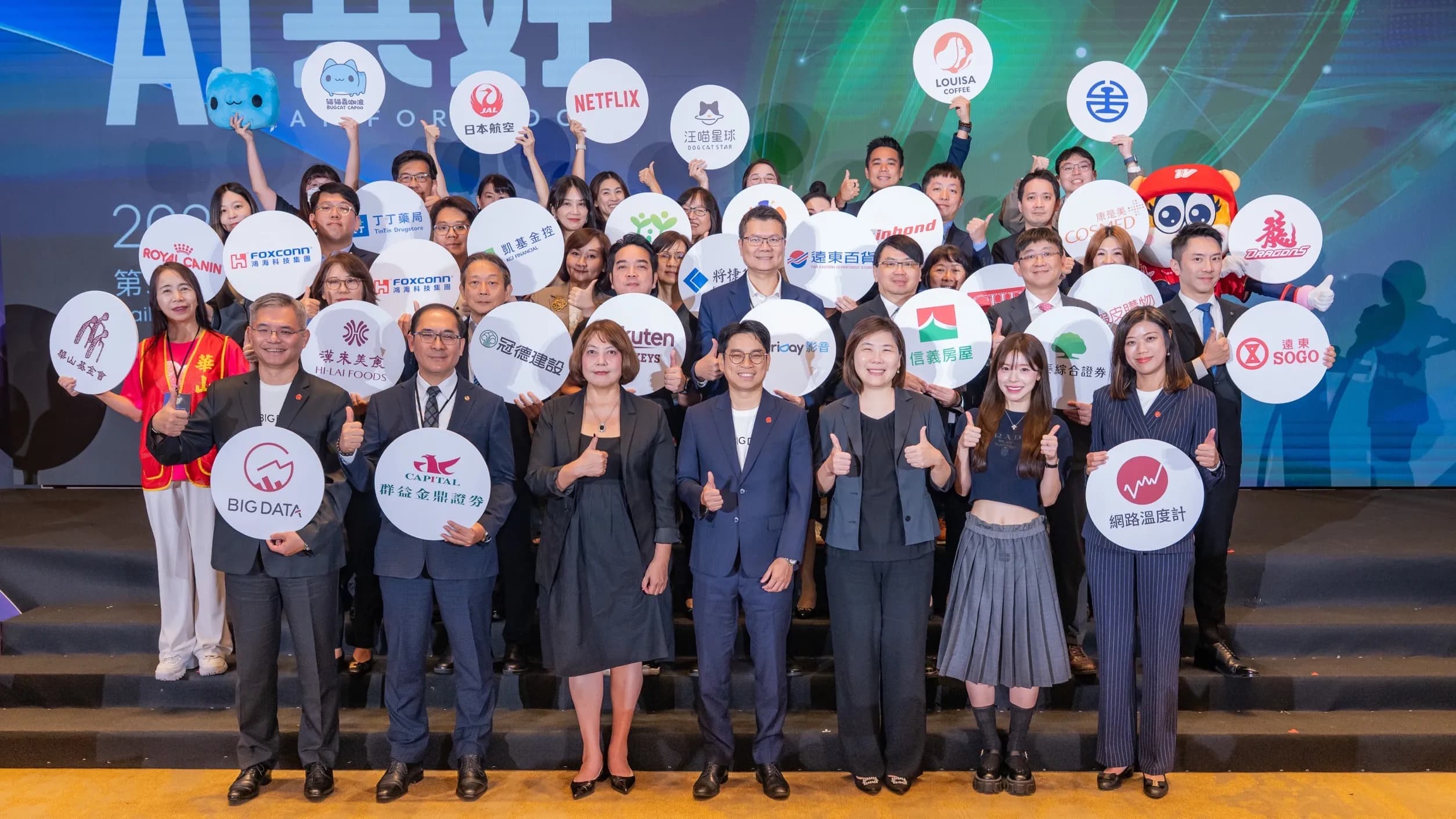
DailyView, Taiwan’s largest data analytics platform, held the ninth DailyView Best Reviewed Online Awards(2026第九屆網路口碑之星) today under the theme “AI for Good.” DailyView is operated by BIG DATA Co., Ltd. Drawing on KEYPO, BIG DATA’s public opinion analytics software, and AI-based semantic analysis, the awards recognized 27 companies across 14 industry categories in three fields: ESG and sustainability, tourism and leisure, and consumer lifestyle. Four individual awards were also presented. Young Liu(劉揚偉), chairman of Hon Hai Technology Group (Foxconn), won Corporate Leader of the Year for Online Reputation for a second time, following 2024. Bugcat Capoo(貓貓蟲咖波), a popular character IP, won Most Valuable Online Influencer – YouTuber for the first time. Lee Da-Hye(李多慧) retained the Most Valuable Online Influencer – Cheerleader title, and Taiwan Railway Corporation won Social Media Team of the Year for Online Reputation. As AI moves from an enterprise efficiency tool into everyday work and life, the question for brands is shifting from whether they have adopted AI to whether it creates value that benefits more people. Presenting awards at the ceremony were Taipei Deputy Mayor Lee Tai-Hsing(李泰興), Tong Ming-Hui(童明慧), chief secretary of the Administration for Digital Industries, Ministry of Digital Affairs, and Nicole Chan(詹婷怡), chairperson of the Digital Trust Association in Taiwan. DailyView also released its 2026 Annual Trend Observation Report. Online discussion related to “AI for Good” rose 134% year over year, and AI-related discussion totaled more than 12.52 million mentions over the year, making AI the most talked-about topic online. The findings suggest that public attention is moving beyond AI adoption toward trust, usage and shared social benefit. Staney Chin(金志丞), chairman of BIG DATA and co-founder of DailyView, said enterprises are shifting from using AI to working alongside it, and AI is increasingly involved in business judgment and decisions. As AI-generated content becomes easier to produce, the line between real and fake is blurring, which makes authenticity and trust scarcer brand assets. Brands have long tracked buzz, favorability and engagement. The more important question ahead, he said, is how much consumers actually trust a brand. BIG DATA will soon launch “Trust Temperature(信任溫度),” which draws on long-accumulated data and multiple angles of observation to give the market a credible basis for judgment. The aim is to help brands understand not only whether they are seen, but whether they are believed.
BIG DATA Sweeps WITSA Global AI Awards and Taiwan AI Excellence Awards
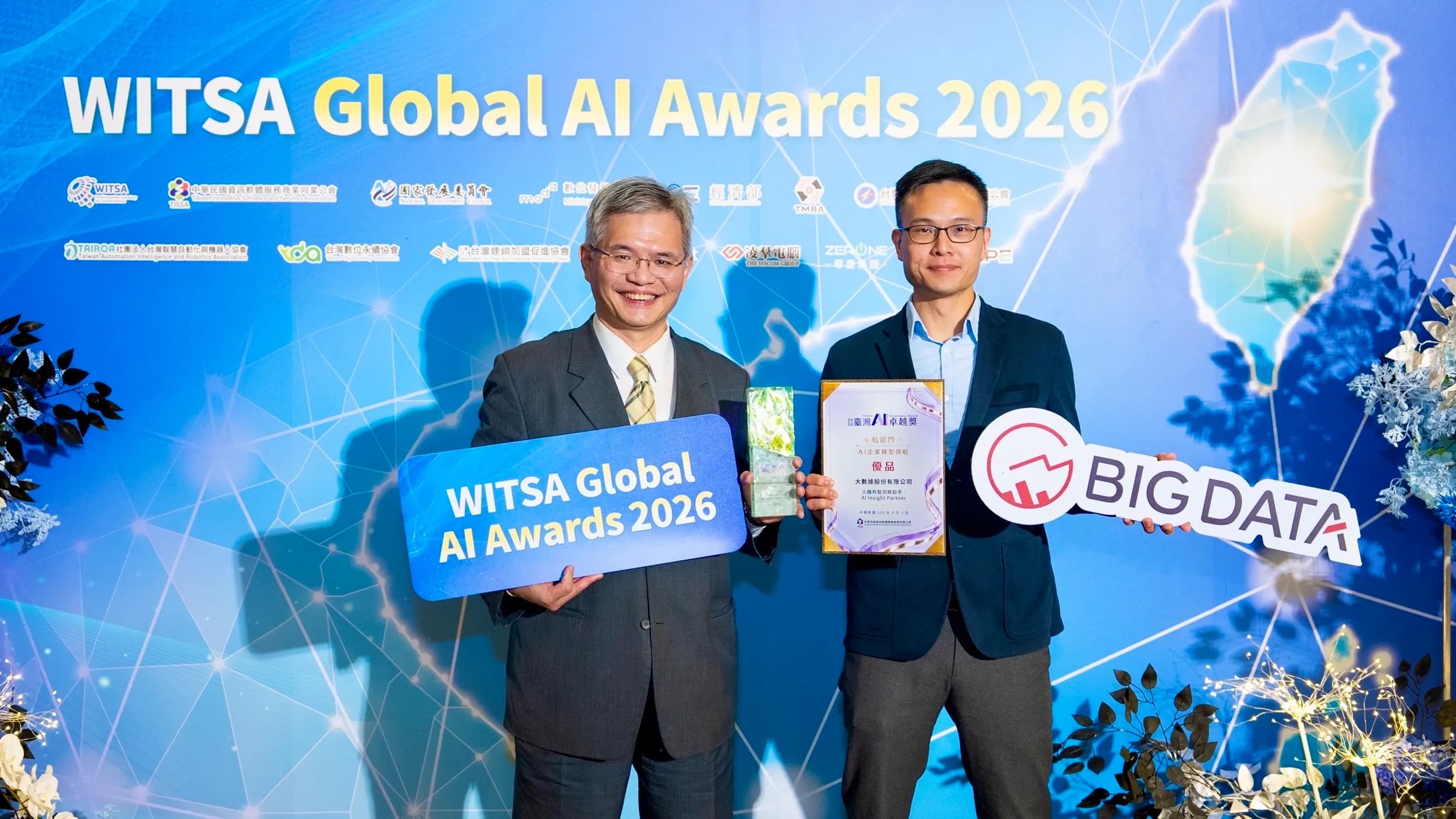
BIG DATA Co., Ltd. (BIG DATA), Taiwan's leading data technology company, has again earned international and domestic recognition for its AI technology and enterprise deployment results. The company announced today that KEYLM, its enterprise knowledge AI agent platform, has won The WITSA Global Award for AI Entrepreneurship at the WITSA Global AI Awards 2026, while AI Insight Partner, its human-AI co-intelligence insight assistant, has received the inaugural Taiwan AI Excellence Award (臺灣 AI 卓越獎) in the “AI Enterprise Transformation Pioneer: Excellence” category. BIG DATA General Manager Mark Wen (温紹郁) and Chief Technology Officer Dr. Sam Meng (孟令三) represented the company at the 2026 Taiwan AI Excellence Award ceremony and the WITSA Global AI Summit gala dinner, where they received the two awards from Minister of Digital Affairs Yi-Jing Lin (林宜敬), WITSA Chairman Dato' Dr. Sean Seah, and Chinese Software Guild Chairman Shen Bo-Yen (沈柏延), respectively. Dr. Sam Meng also demonstrated KEYLM at the WITSA Global AI Award international press conference, showing how the platform addresses real-world pain points in enterprise AI adoption by starting with an organization's internal knowledge. “The next stage of enterprise AI adoption isn't about pursuing more powerful models. It's about how AI can truly understand a company's own data, knowledge, and workflows,” said Mark Wen. “These two awards, spanning on-premise enterprise AI and AI-driven workflow transformation, reflect BIG DATA's ability to turn data, models, and enterprise knowledge into real business value, and to move AI development from research into industry-wide deployment. We will continue deepening the collaboration between AI and enterprise knowledge, data, and human expertise, helping more companies bring AI into their everyday operations and decision-making.”

Beyond Tokyo and Osaka: Taiwanese Travelers Enter the "Repeat Visit Era" as Fukuoka Buzz Surges Over 85% Year-on-Year
As Japan shifts from "where to go first" to "where to go next," the travel map for Taiwanese visitors to Japan is changing. BIG DATA Co., Ltd., Taiwan's leading data technology company, today (27th) released its latest report, Japan's Regional Cities Strike Back: How Emerging Travel Favorites Are Capturing Taiwanese Curiosity. Using KEYPO Big Data Intelligence, its public opinion analytics software, to track online buzz related to Taiwanese travel to Japan between January 1, 2023 and May 31, 2026, the report finds that Taiwanese travelers' interest in regional cities outside Japan's three major metropolitan areas continues to grow. In the first five months of 2026, regional cities accounted for 35% of total travel-related buzz, up markedly from 29% in 2023 — while the share held by the three major metropolitan areas has declined year over year from 51%, signaling that Taiwanese travelers' destination choices in Japan are steadily extending outward. Among regional destinations, Fukuoka Prefecture topped the growth chart with an 85.49% year-on-year increase in buzz, driven by newly launched direct flights from Taiwan, the ability to self-drive across Kyushu, and the rise of immersive local experiences. Kumamoto Prefecture and Okinawa Prefecture followed closely with growth of 46.36% and 45% respectively, emerging as the most notable "regional dark horses" on the Japan travel map. Weiwei Chiang, COO of BIG DATA, said that as Taiwanese travelers accumulate more trips to Japan, and as regional direct flight routes and self-drive/charter travel options expand, travel decisions are shifting from checking off popular landmarks to seeking in-depth local experiences. The rise of regional cities reflects more than a reshuffling of popular destination rankings — it marks Taiwanese travelers' formal entry into a "Repeat Visit Era" centered on local exploration, personal interests, and immersive experiences, sending an important signal for tourism operators, airlines, and local governments to reposition their strategies.