
2026 DailyView Best Reviewed Online Awards honor 27 companies and four individuals
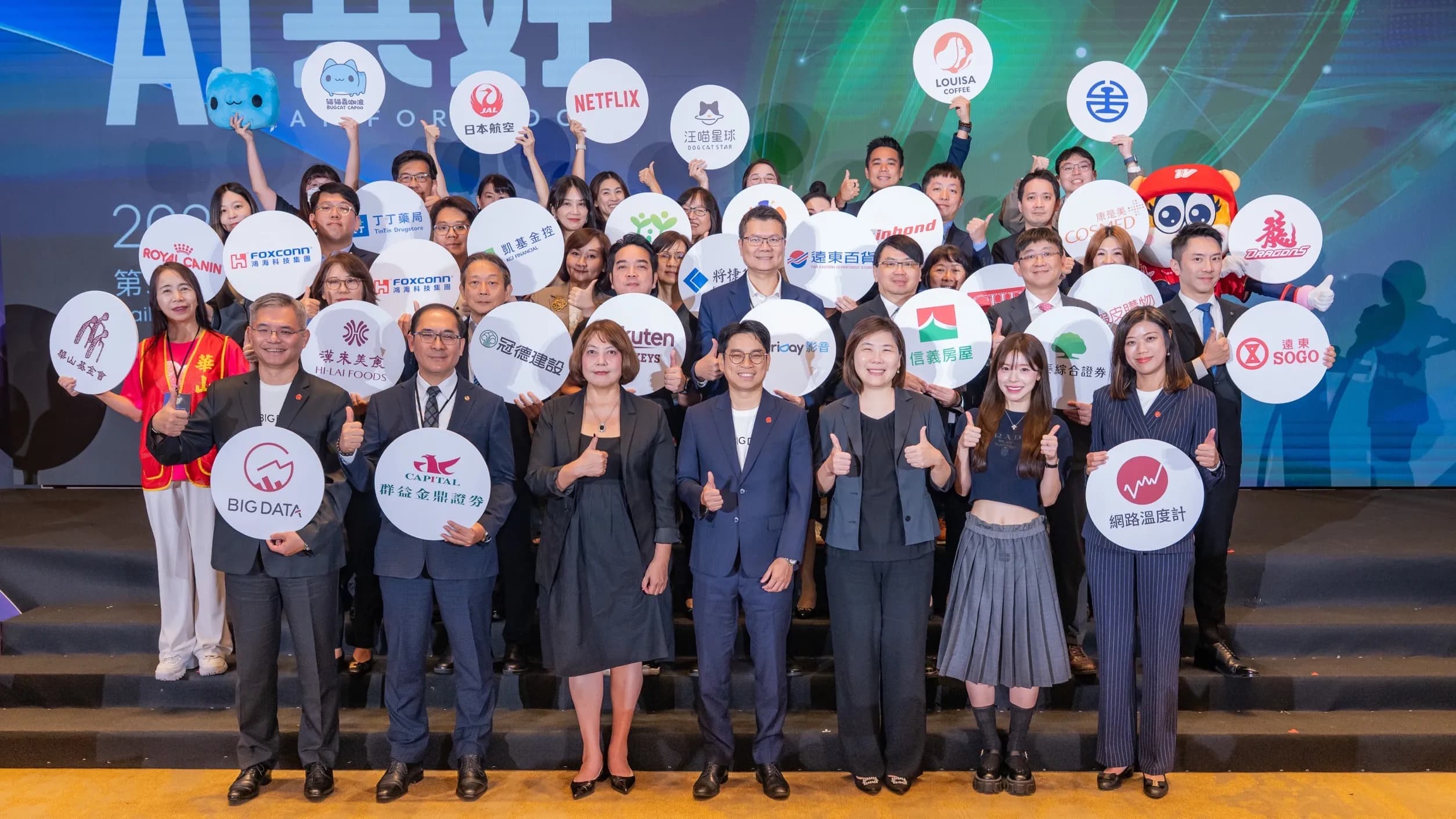
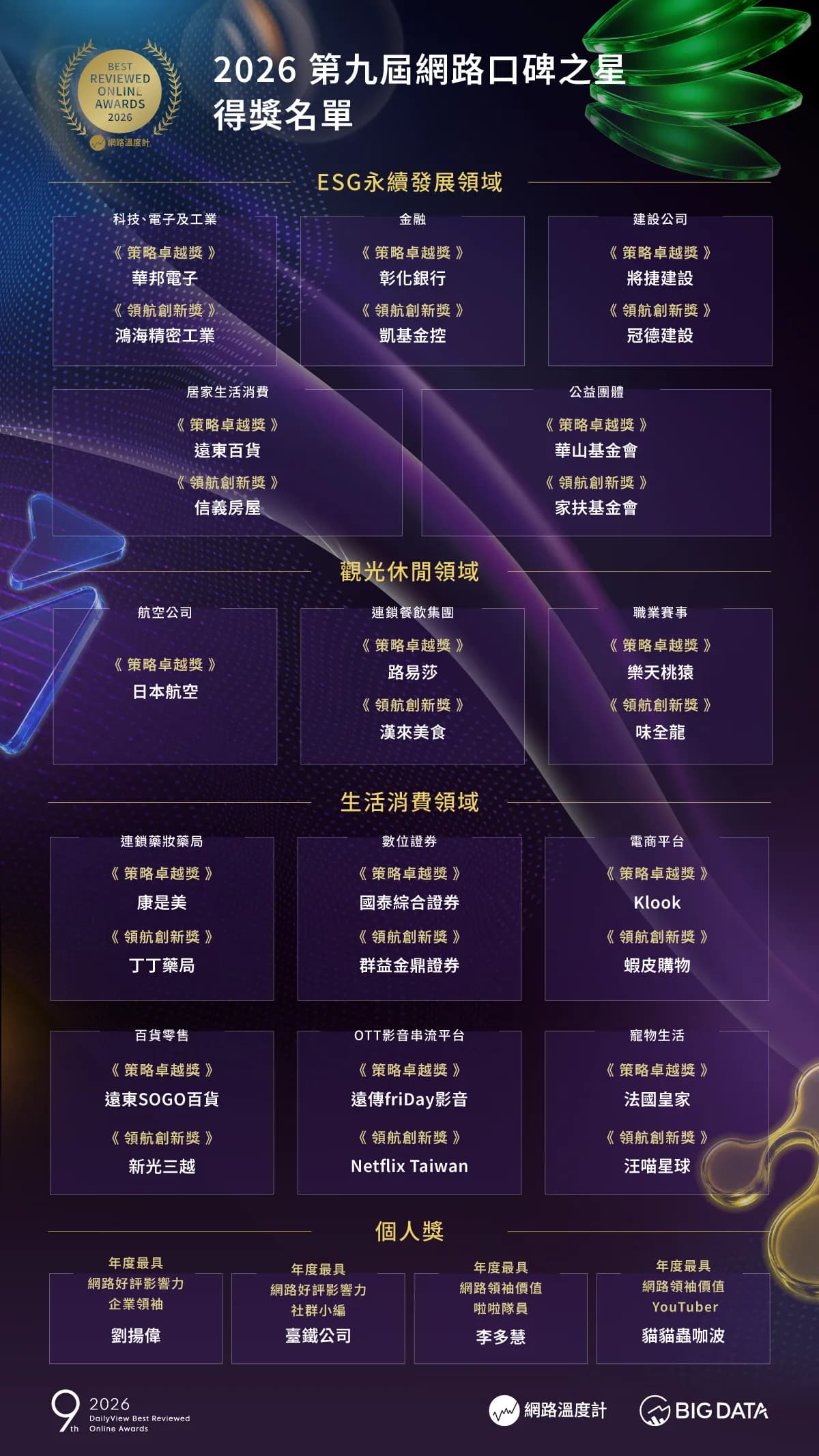
DailyView, Taiwan’s largest data analytics platform, held the ninth DailyView Best Reviewed Online Awards(2026第九屆網路口碑之星) today under the theme “AI for Good.” DailyView is operated by BIG DATA Co., Ltd. Drawing on KEYPO, BIG DATA’s public opinion analytics software, and AI-based semantic analysis, the awards recognized 27 companies across 14 industry categories in three fields: ESG and sustainability, tourism and leisure, and consumer lifestyle.
Four individual awards were also presented. Young Liu(劉揚偉), chairman of Hon Hai Technology Group (Foxconn), won Corporate Leader of the Year for Online Reputation for a second time, following 2024. Bugcat Capoo(貓貓蟲咖波), a popular character IP, won Most Valuable Online Influencer – YouTuber for the first time. Lee Da-Hye(李多慧) retained the Most Valuable Online Influencer – Cheerleader title, and Taiwan Railway Corporation won Social Media Team of the Year for Online Reputation.
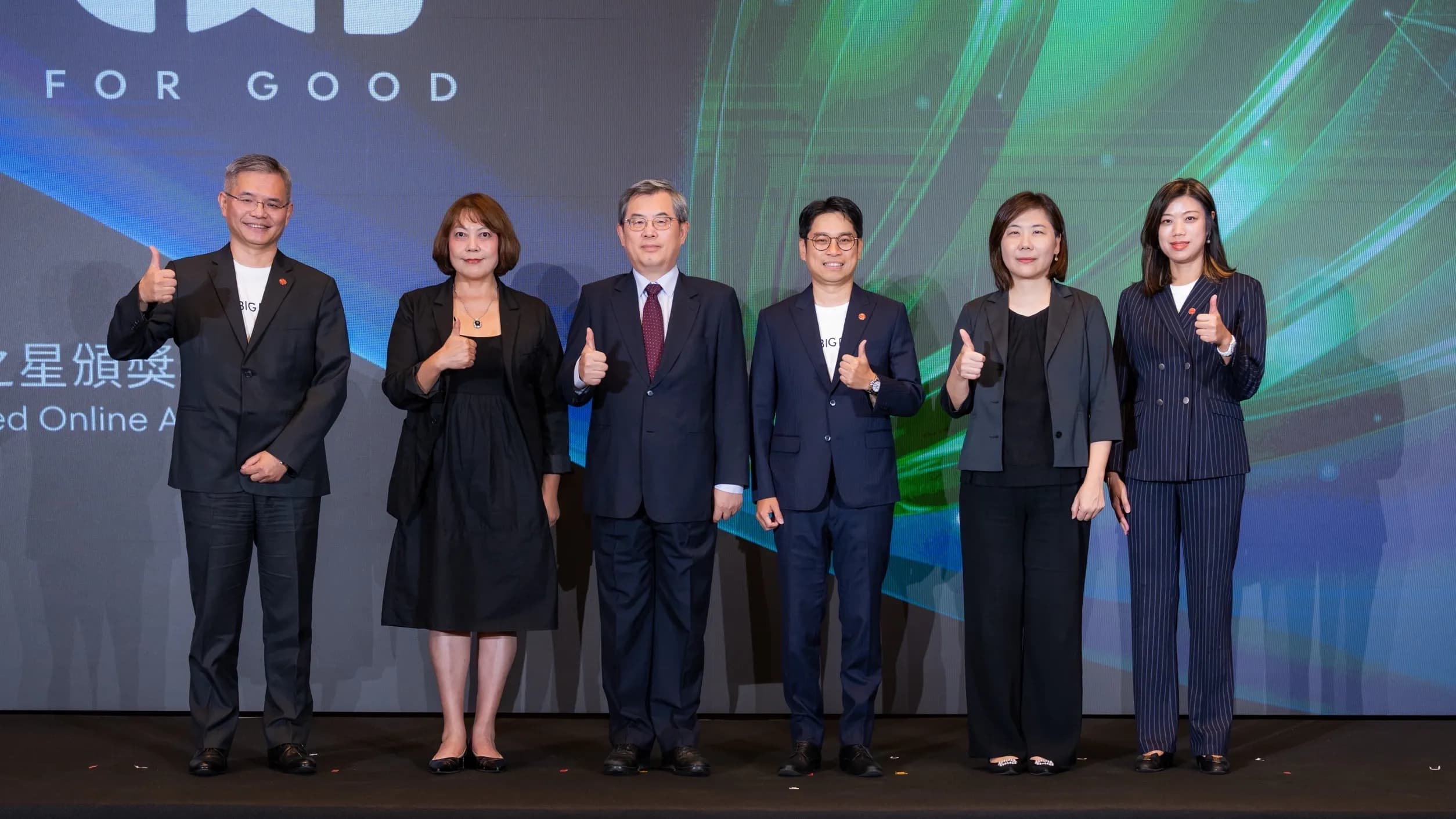
As AI moves from an enterprise efficiency tool into everyday work and life, the question for brands is shifting from whether they have adopted AI to whether it creates value that benefits more people. Presenting awards at the ceremony were Taipei Deputy Mayor Lee Tai-Hsing(李泰興), Tong Ming-Hui(童明慧), chief secretary of the Administration for Digital Industries, Ministry of Digital Affairs, and Nicole Chan(詹婷怡), chairperson of the Digital Trust Association in Taiwan.
DailyView also released its 2026 Annual Trend Observation Report. Online discussion related to “AI for Good” rose 134% year over year, and AI-related discussion totaled more than 12.52 million mentions over the year, making AI the most talked-about topic online. The findings suggest that public attention is moving beyond AI adoption toward trust, usage and shared social benefit.
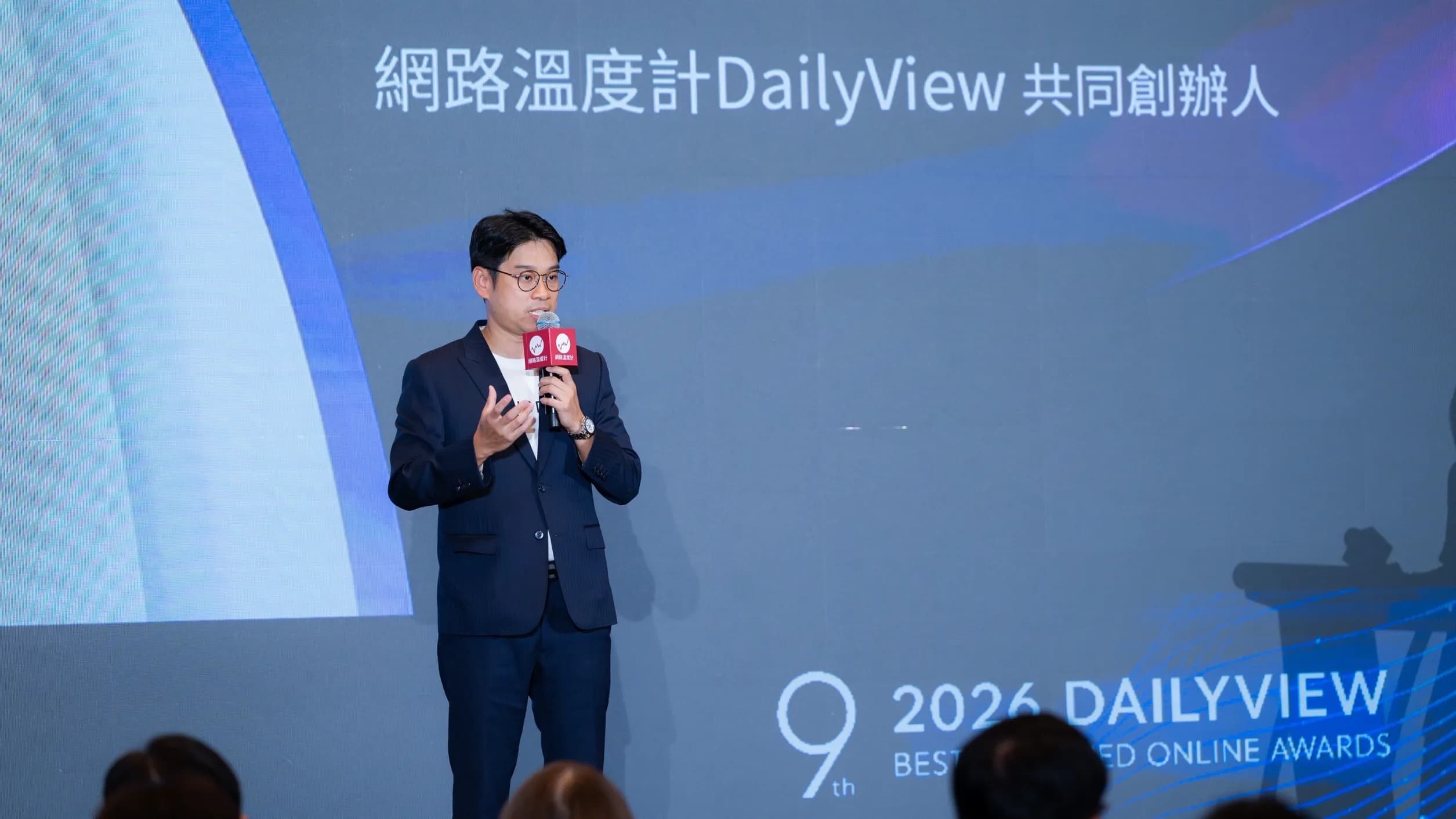
Staney Chin(金志丞), chairman of BIG DATA and co-founder of DailyView, said enterprises are shifting from using AI to working alongside it, and AI is increasingly involved in business judgment and decisions. As AI-generated content becomes easier to produce, the line between real and fake is blurring, which makes authenticity and trust scarcer brand assets. Brands have long tracked buzz, favorability and engagement. The more important question ahead, he said, is how much consumers actually trust a brand. BIG DATA will soon launch “Trust Temperature(信任溫度),” which draws on long-accumulated data and multiple angles of observation to give the market a credible basis for judgment. The aim is to help brands understand not only whether they are seen, but whether they are believed.
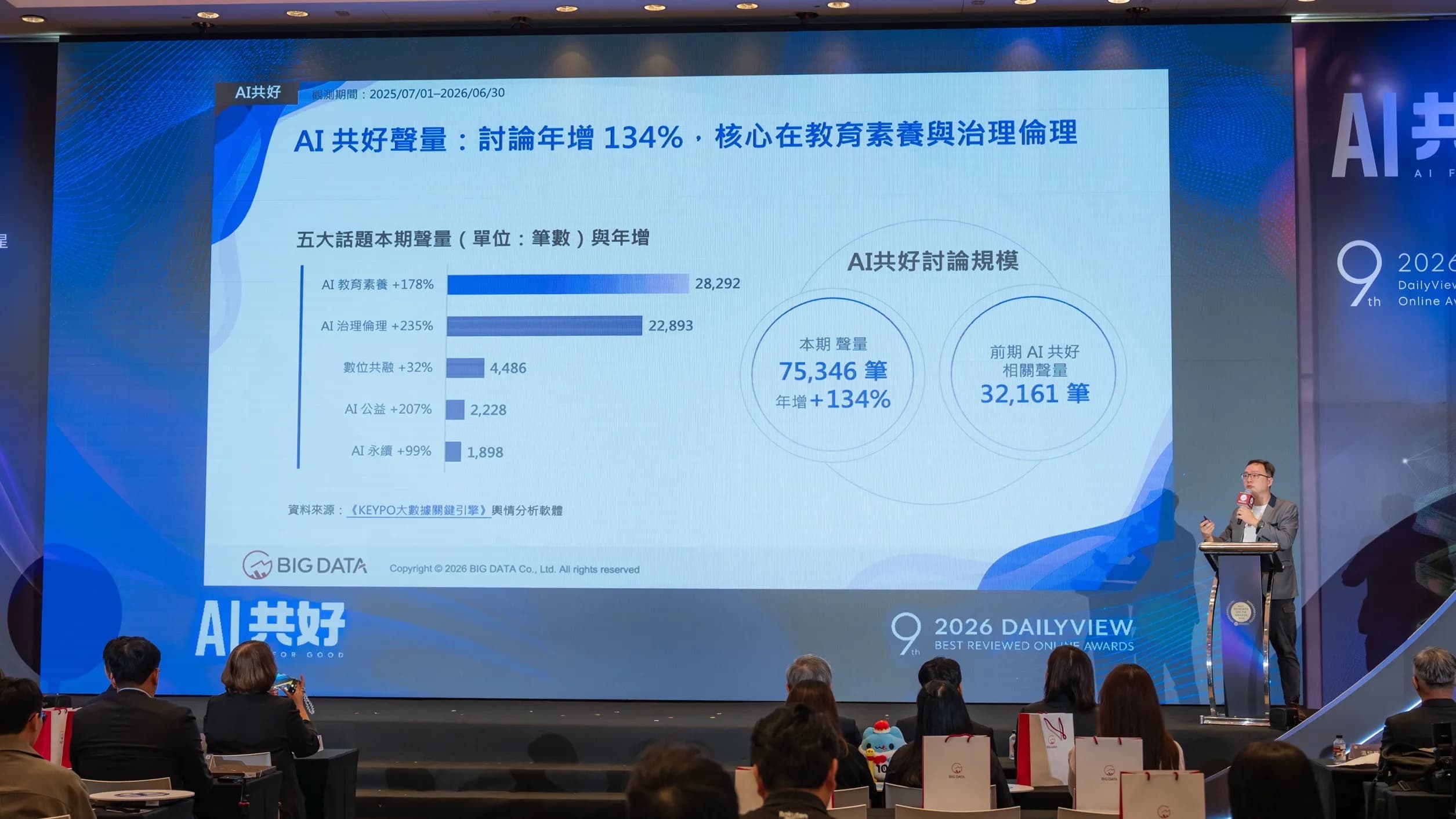
“AI for Good” conversation up 134% year over year; Threads emerges as a new arena for brand reputation
AI was not only the most closely followed topic online this year. It is also moving quickly into enterprises. As AI applications spread, the next challenge for companies is making AI affordable and effective for more organizations and users. KEYPO data show that online discussion related to “AI for Good” grew 134% year over year. Among five discussion themes, “AI education and literacy” grew the most, up 178%. Popular keywords last year centered on “generative,” “transformation” and “telecom.” This year, “partnership,” “ethics” and “teachers” joined them, suggesting the AI conversation is moving from how companies use AI to who they work with, who it serves and what rules it should follow.
Social platforms are also changing how brands build relationships with consumers. KEYPO data show Facebook remained the leading social platform, while Threads was the fastest-growing. In an analysis of popular Threads posts, “lifestyle and mood” and “interactive and chain-style” posts together made up nearly 60%. The average original post was shared 32 times, more than six times the Facebook average of five. This indicates that real-time experiences, life sharing and active audience participation are becoming new arenas for brand reputation to spread.
Weiwei Chiang(蔣志薇), chief operating officer of BIG DATA, said AI and social media have redefined brand influence and changed how brands build relationships with consumers. Brands once controlled content and distribution. Now AI lowers the barrier to producing content, and social media makes every consumer a participant in, and a carrier of, information. Brand influence is no longer just a matter of how much exposure a brand creates, but how many people are willing to engage, identify with it and share it on their own. What brands need to cultivate going forward, she said, is a deeper understanding of consumers, turning each interaction into accumulated trust and building lasting influence.
From trust to AI to ESG: industry experts discuss putting “AI for Good” into practice
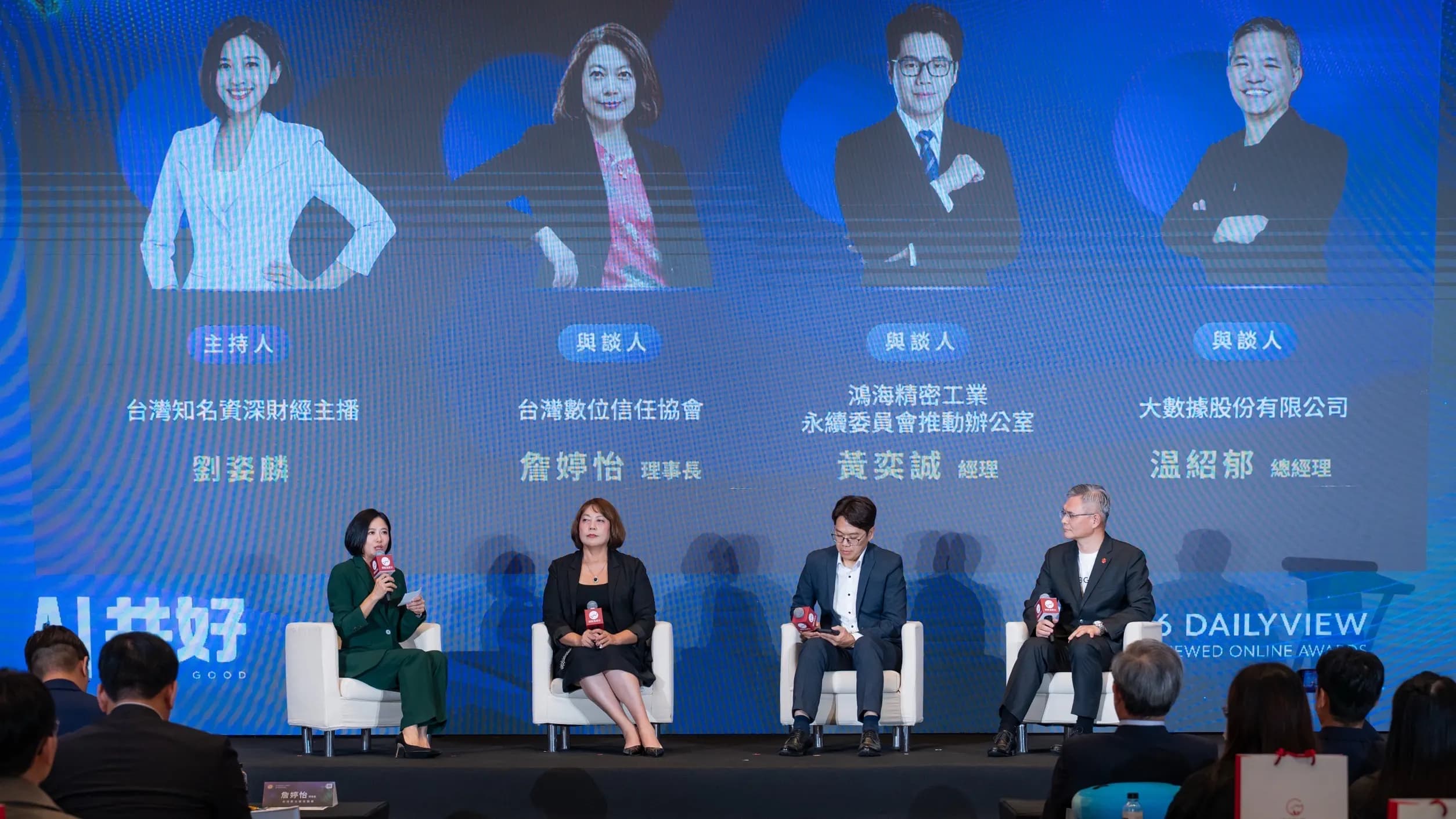
In keeping with this year’s theme, the ceremony featured a panel discussion titled “AI for Good: A New Balance Among Technology, Trust and Sustainability.” Panelists were Nicole Chan, chairperson of the Digital Trust Association in Taiwan; Mark Wen(温紹郁), general manager of BIG DATA; and Nick Huang(黃奕誠), manager of the Sustainability Committee Promotion Office at Hon Hai Precision Industry. Speaking from the perspectives of trust, AI and ESG, they discussed how digital trust can become foundational infrastructure in the AI era, how companies can balance AI innovation with data credibility, and how large manufacturers can make AI applications and sustainability transformation reinforce each other. Together, they outlined a path for putting “AI for Good” into practice, one that balances technology, trust and sustainability.
Chan said that as AI moves from a tool into core business processes, the challenge for companies is no longer only technical but one of trust. Responsible AI, she said, must rest on transparency, explainability, trustworthiness and accountability, supported by sound AI governance and human-AI collaboration so that innovation can keep developing in a trusted environment.
Speaking from the standpoint of enterprise AI deployment, Wen said the real challenge is no longer choosing a model or tool but integrating trusted data, workflows and organizational talent so that AI becomes part of daily operations. In his view, the key to “AI for Good” is that AI should not remain an advantage held by a few companies or technology leaders. Companies of different sizes and more users should be able to use it and trust it, so that technological progress becomes value that more people can share.
On ESG practice, Huang said sustainable business must balance EPS and ESG. Beyond speeding up decisions and improving operational efficiency, AI’s benefits should extend to supply chains and partners. Companies should not only move fast themselves but bring partners along for the long run, he said, and by repeatedly delivering on what they promise, build a virtuous cycle among AI, ESG and trust.
Cathay Securities wins digital securities category for fourth straight year as winners show reputation gains
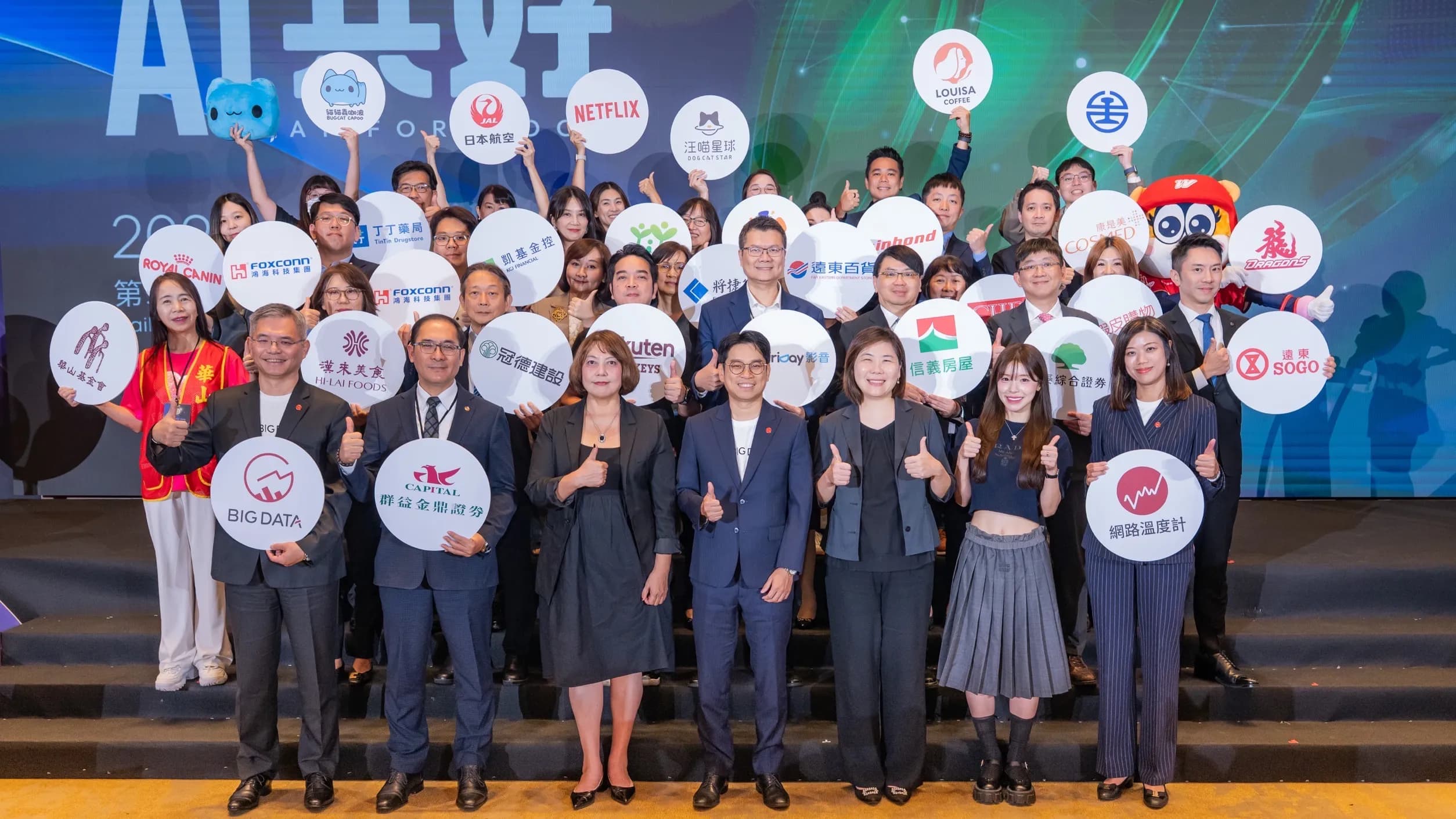
This year’s awards focused on three fields: ESG and sustainability (SDGs), tourism and leisure, and consumer lifestyle. Companies were assessed across 14 industry categories for two awards, Innovation Leadership and Strategic Excellence, and 27 companies were recognized. Online data for the year show that changes in AI, supply chains, service experience and consumer behavior are reflected clearly in reputation across industries.
Cathay Securities won the digital securities category for a fourth consecutive year, one of the highlights of this year’s corporate awards. Hon Hai Precision Industry’s online engagement rose 68% and its online favorability grew 80%. Winbond Electronics’ positive mentions increased 101% and its online engagement rose 229%. The results show brand reputation building steadily amid fast changes in AI, supply chains and markets.
Industry discussion also shows AI reaching a range of consumer and service settings. In tourism and leisure, mentions of AI applications among restaurant chains grew 35.9% year over year. Among this year’s winners, Louisa Coffee’s online engagement rose 77% and its AI-related mentions 169%, while Hi-Lai Foods’ online engagement rose 50% and its AI-related mentions 344%. Professional sports were another highlight of reputation growth. Winner Rakuten Monkeys saw online engagement grow 120% and positive mentions 78%. Wei Chuan Dragons’ online engagement rose 26% and positive mentions 13%, consistent with record attendance and a rise of more than 36% in mentions of packed crowds.
In consumer lifestyle, video streaming and e-commerce services stood out. Far EasTone friDay Video saw online favorability rise 51% and total mentions 32%, while Netflix Taiwan’s online engagement rose 51% and positive mentions 29% year over year. Winner Klook offers a concrete example of “AI for Good” in service experience: its AI customer service handles two-thirds of inquiries, with a resolution rate of 90%. Together, these cases show how technology, content and service experience are shaping consumer views of brands.
Young Liu wins corporate leader award again; Lee Da-Hye retains cheerleader title
Among the individual awards, Hon Hai Technology Group Chairman Young Liu was again named Corporate Leader of the Year for Online Reputation, following his 2024 win. He generated 18,689 online mentions over the past year, 62% of them about AI, from enterprise AI transformation to smart healthcare, as he continues to expand the industrial and social impact of technology innovation. Lee Da-Hye retained the Most Valuable Online Influencer – Cheerleader title, with nearly 590,000 mentions over the year, up 32% year over year. She has extended her influence to public causes including support for people with disabilities, anti-drug and anti-drunk-driving campaigns, and Hualien disaster relief.
Bugcat Capoo, a popular character IP and a first-time winner of the Most Valuable Online Influencer – YouTuber award, publishes dialogue-free, cross-language content across six major social platforms. Its YouTube channel has passed 3 million subscribers, and its online engagement grew 38% this year. Taiwan Railway Corporation won the Social Media Team award for humorous, timely and personable communication that built goodwill. Its “Shovel Superheroes” post series drew a strong response during the Hualien typhoon disaster.
For more information, visit the official website of the 2026 DailyView Best Reviewed Online Awards: https://dailyview.tw/dba2026/

Related Articles
BIG DATA Sweeps WITSA Global AI Awards and Taiwan AI Excellence Awards
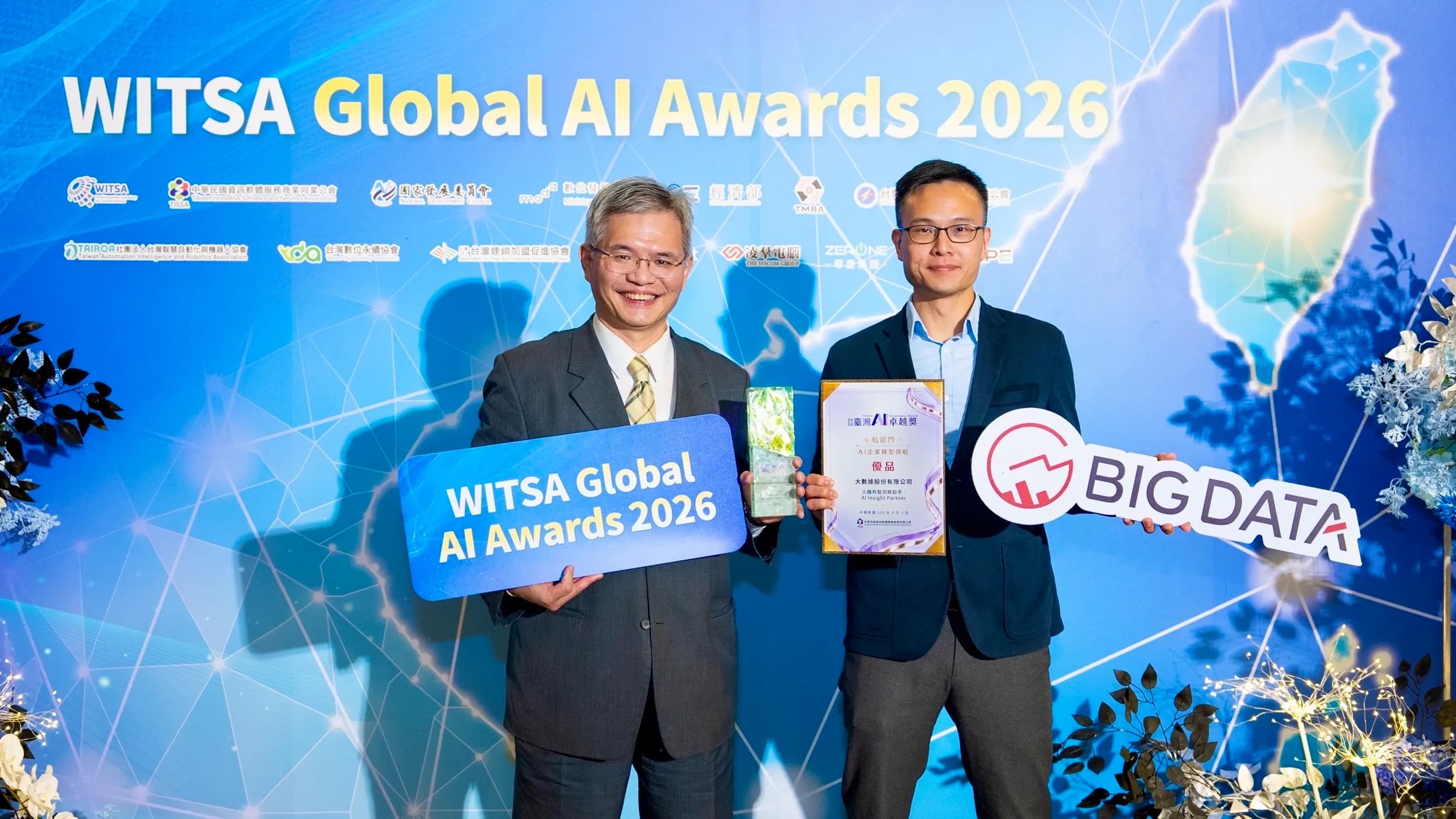
BIG DATA Co., Ltd. (BIG DATA), Taiwan's leading data technology company, has again earned international and domestic recognition for its AI technology and enterprise deployment results. The company announced today that KEYLM, its enterprise knowledge AI agent platform, has won The WITSA Global Award for AI Entrepreneurship at the WITSA Global AI Awards 2026, while AI Insight Partner, its human-AI co-intelligence insight assistant, has received the inaugural Taiwan AI Excellence Award (臺灣 AI 卓越獎) in the “AI Enterprise Transformation Pioneer: Excellence” category. BIG DATA General Manager Mark Wen (温紹郁) and Chief Technology Officer Dr. Sam Meng (孟令三) represented the company at the 2026 Taiwan AI Excellence Award ceremony and the WITSA Global AI Summit gala dinner, where they received the two awards from Minister of Digital Affairs Yi-Jing Lin (林宜敬), WITSA Chairman Dato' Dr. Sean Seah, and Chinese Software Guild Chairman Shen Bo-Yen (沈柏延), respectively. Dr. Sam Meng also demonstrated KEYLM at the WITSA Global AI Award international press conference, showing how the platform addresses real-world pain points in enterprise AI adoption by starting with an organization's internal knowledge. “The next stage of enterprise AI adoption isn't about pursuing more powerful models. It's about how AI can truly understand a company's own data, knowledge, and workflows,” said Mark Wen. “These two awards, spanning on-premise enterprise AI and AI-driven workflow transformation, reflect BIG DATA's ability to turn data, models, and enterprise knowledge into real business value, and to move AI development from research into industry-wide deployment. We will continue deepening the collaboration between AI and enterprise knowledge, data, and human expertise, helping more companies bring AI into their everyday operations and decision-making.”

Beyond Tokyo and Osaka: Taiwanese Travelers Enter the "Repeat Visit Era" as Fukuoka Buzz Surges Over 85% Year-on-Year
As Japan shifts from "where to go first" to "where to go next," the travel map for Taiwanese visitors to Japan is changing. BIG DATA Co., Ltd., Taiwan's leading data technology company, today (27th) released its latest report, Japan's Regional Cities Strike Back: How Emerging Travel Favorites Are Capturing Taiwanese Curiosity. Using KEYPO Big Data Intelligence, its public opinion analytics software, to track online buzz related to Taiwanese travel to Japan between January 1, 2023 and May 31, 2026, the report finds that Taiwanese travelers' interest in regional cities outside Japan's three major metropolitan areas continues to grow. In the first five months of 2026, regional cities accounted for 35% of total travel-related buzz, up markedly from 29% in 2023 — while the share held by the three major metropolitan areas has declined year over year from 51%, signaling that Taiwanese travelers' destination choices in Japan are steadily extending outward. Among regional destinations, Fukuoka Prefecture topped the growth chart with an 85.49% year-on-year increase in buzz, driven by newly launched direct flights from Taiwan, the ability to self-drive across Kyushu, and the rise of immersive local experiences. Kumamoto Prefecture and Okinawa Prefecture followed closely with growth of 46.36% and 45% respectively, emerging as the most notable "regional dark horses" on the Japan travel map. Weiwei Chiang, COO of BIG DATA, said that as Taiwanese travelers accumulate more trips to Japan, and as regional direct flight routes and self-drive/charter travel options expand, travel decisions are shifting from checking off popular landmarks to seeking in-depth local experiences. The rise of regional cities reflects more than a reshuffling of popular destination rankings — it marks Taiwanese travelers' formal entry into a "Repeat Visit Era" centered on local exploration, personal interests, and immersive experiences, sending an important signal for tourism operators, airlines, and local governments to reposition their strategies.
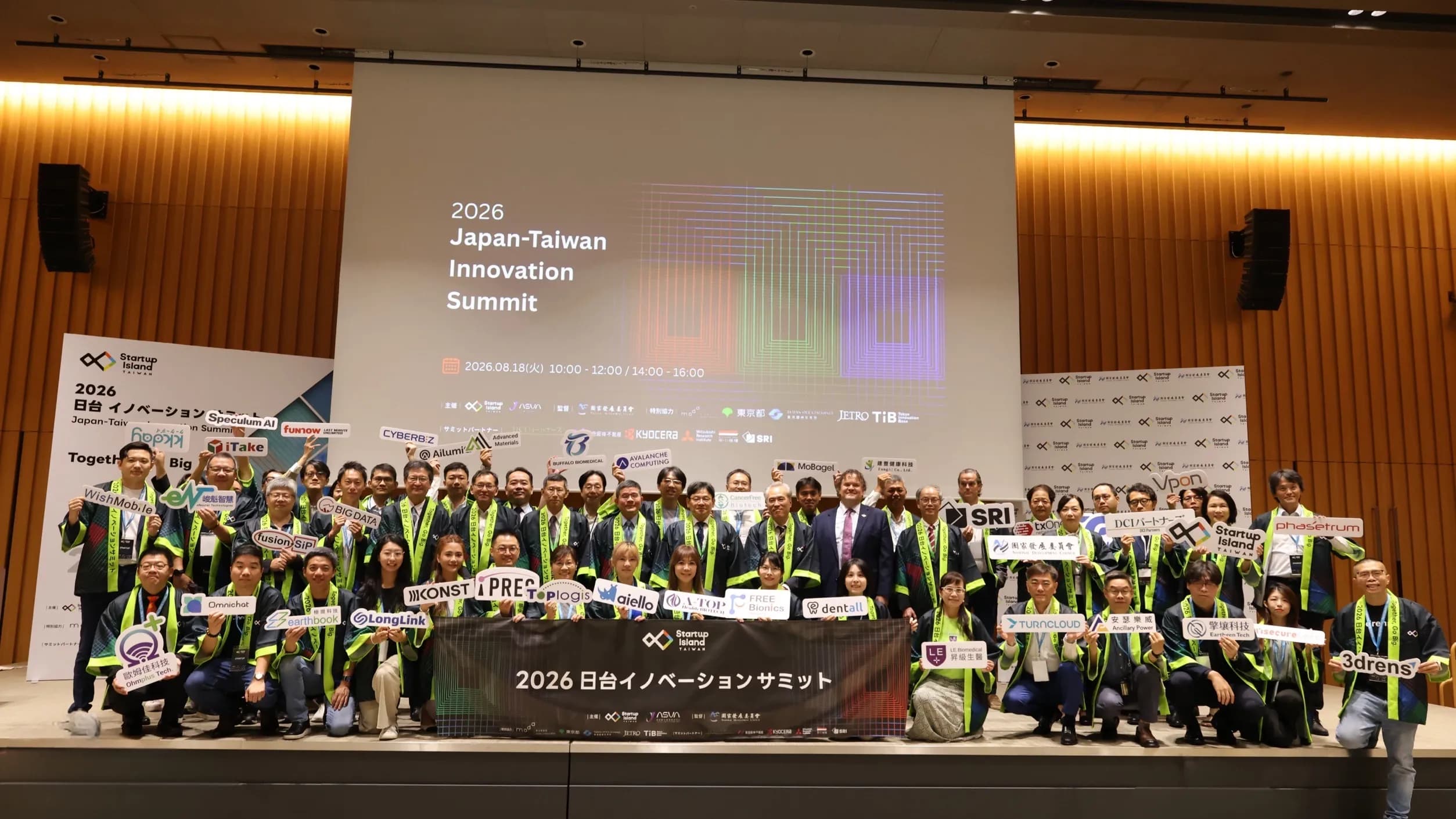
Accelerating Global Expansion: BIG DATA Takes the Stage at the 2026 Japan-Taiwan Innovation Summit
Following its first-ever participation in SusHi Tech Tokyo in Japan this past April and its appearance at 2026 LEAP East in Hong Kong in July, BIG DATA Co., Ltd. — Taiwan's leading data technology company — will make its debut appearance at the 2026 Japan-Taiwan Innovation Summit on August 18-19, the flagship annual international innovation event launched by Startup Island TAIWAN, the national startup brand created by Taiwan's National Development Council (NDC). The summit brings together key Taiwan-Japan representatives including NDC Minister Chun-Hsien Yeh, Tokyo Governor Yuriko Koike, and JETRO Director Tomohiro Takashima, making it one of the highest-visibility annual exchange events for Taiwanese startups in Japan. BIG DATA will showcase two AI solutions to Japanese enterprises and industry partners: the newly upgraded “KEYPO Agent” and the “KEYLM — Private AI Platform for Enterprise Knowledge”, demonstrating Taiwan's technical capabilities in AI, data governance, and enterprise decision-making applications, while continuing to pursue local partnership opportunities to deepen its presence in the Japanese market. WeiWei Chiang, COO and Spokesperson of BIG DATA, said Japan is one of the company's key markets for overseas expansion. From participating in international exhibitions and engaging local enterprises to seeking technical and business collaboration opportunities, BIG DATA hopes that sustained, long-term market engagement will help it better understand the actual needs of Japanese enterprises and bring Taiwan's mature data and AI application experience into the Japanese market.